
Redefining Work: Who counts as a worker in South Africa?
Written by
Natasha Winkler-Titus
Published on
01 May 2026
HISTORICALLY, Workers’ Day symbolised victories for organised labour in the formal economy: fair wages, safe working conditions and the right to organise. Yet in contemporary South Africa, the meaning of “worker” has become far more complex. In a country facing persistently high unemployment and shifting labour markets, the question we must ask is simple but profound: Who counts as a worker?
From a work psychology perspective, work shapes identity, dignity and belonging. But when definitions of work remain narrow, millions of people who contribute economically and socially fall outside the recognition and protection traditionally afforded to workers.

Who are workers? South African labour law recognises several categories of workers within formal employment relationships, including permanent employees, fixed-term workers, part-time employees, casual workers, domestic workers, farmworkers and temporary agency staff. These groups are generally protected under frameworks such as the Basic Conditions of Employment Act.
However, independent contractors, freelancers and many gig workers are legally classified as self-employed rather than employees. As a result, they are often excluded from the legal frameworks designed to safeguard workers’ rights.
This distinction reveals a tension in modern labour markets: the widening gap between those recognised as workers in law and those who work in practice.
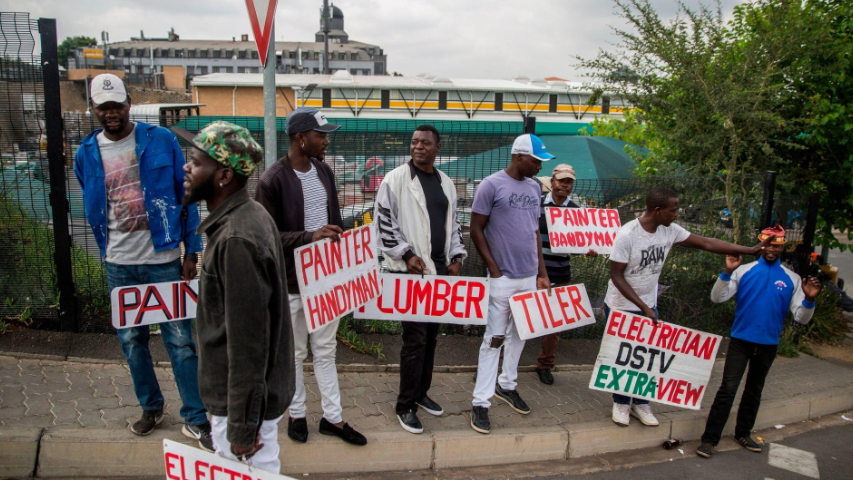
The precarious nature of work: The structure of work itself is changing. Globally and locally, employment relationships are becoming more flexible, project-based and temporary. Non-standard employment arrangements, such as freelancers, consultants, gig workers, and platform-based workers, are increasingly common. Many workers face irregular income, limited benefits, weak legal protection and minimal bargaining power.
For example, in South Africa, living costs for the average domestic worker have risen by 15% in the past year, far outpacing the roughly 5% increase in earnings, adding strain to mental health due to the persistent challenges of low wages, job insecurity and safety concerns. Over half of employees in South Africa have reportedly been medically diagnosed with a mental health condition, with work-related stress being a major contributor. Employee absenteeism linked to depression costs the South African economy an estimated R19 billion annually. Broader mental health-related costs, including reduced productivity and turnover, range from R40bn to as high as R161bn.
These realities emphasise that the quality of work matters just as much as access to work. A truly dignified job must include not only physical safety, but also psychological safety within an environment where individuals can raise concerns without fear.
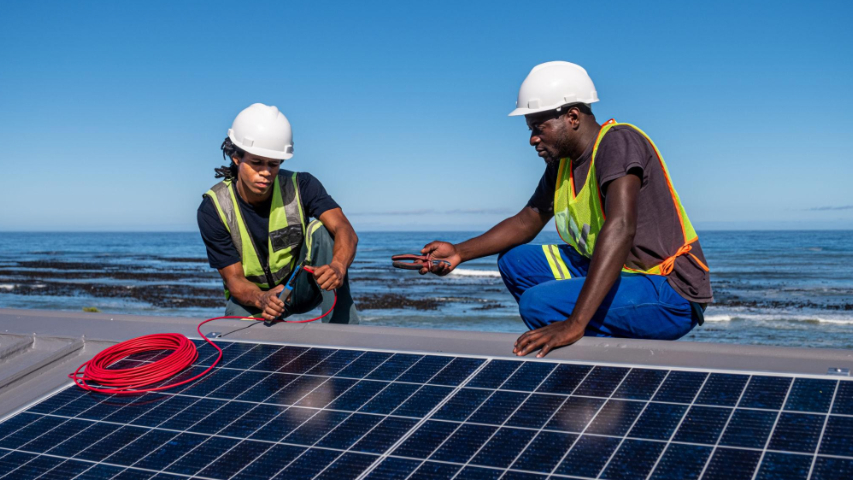
Unemployment and the limits of the formal sector: South Africa’s official unemployment rate stood at approximately 31.9% in 2025, with youth unemployment exceeding 46%. These figures point to a hard truth: the formal sector alone cannot absorb the country’s growing labour force.
In practice, millions of South Africans survive through alternative forms of work outside traditional employment relationships. These include street vending, home-based enterprises, informal trading, platform work and various forms of self-employment.
Informal employment accounts for 21.4% of work in South Africa, providing income for millions of households. Rather than viewing the informal sector as a marginal or temporary phenomenon, it should be recognised as an essential part of the labour market.
Expanding work opportunities: There is no single solution which will resolve unemployment; a multi-pronged strategy is essential. Supporting informal enterprises through infrastructure, access to finance and skills development can significantly enhance their productivity. Entrepreneurship and small businesses also play a crucial role in job creation. However, entrepreneurs often face barriers such as limited access to funding, regulatory complexity and high failure rates. Addressing these constraints could transform job seeker into job creators.
Public employment programmes also provide another important safety net, especially those that create temporary employment opportunities for low-skilled workers. Investment in skills development, vocational training and emerging sectors such as renewable energy and township economies can unlock new pathways to employment. Workers’ rights must evolve alongside the changing nature of work. In a country facing deep unemployment and inequality, the challenge is not only to create jobs but to redefine how we understand work itself.
Winkler-Titus is a senior lecturer in leadership and organisational behaviour and programme head of the PGDip Leadership Development at Stellenbosch Business School.